

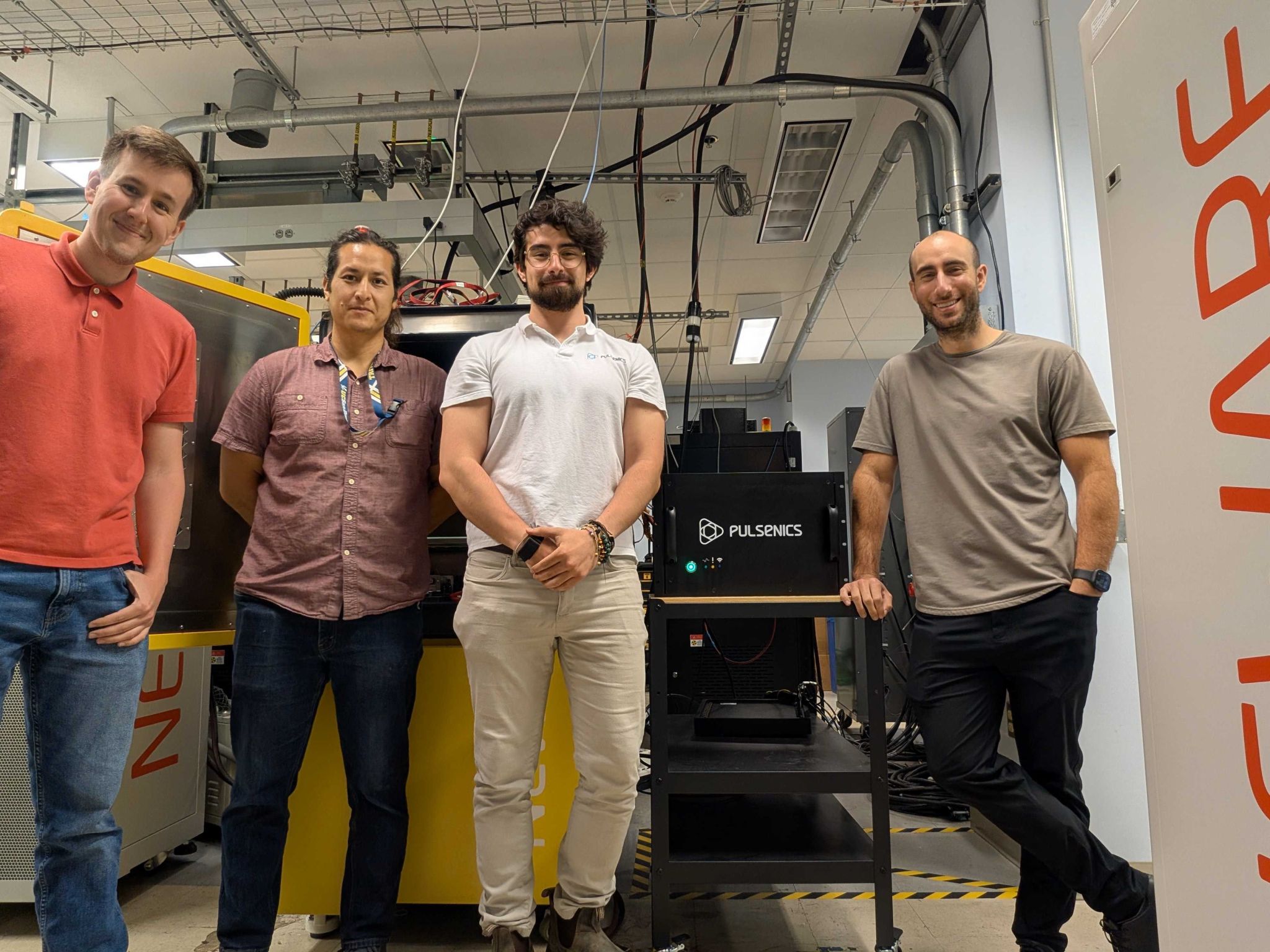
Real-Time Electrochemical Stack Characterization with Pulsenics
Project Description
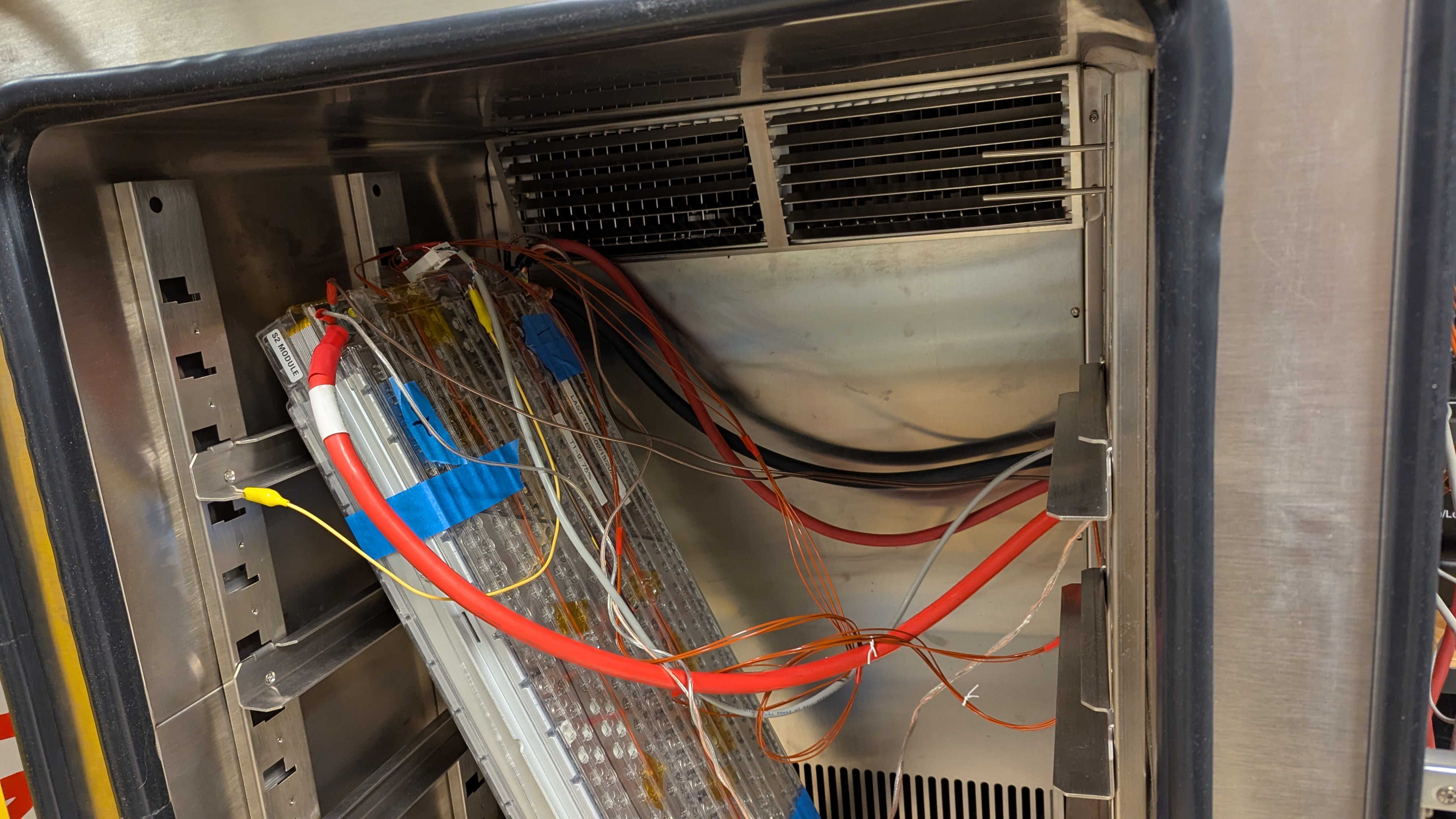
As electric vehicles scale to higher power, longer range, and greater durability requirements, understanding how lithium-ion cells behave under real operating conditions becomes essential. UC San Diego, in collaboration with Pulsenics under the CalTestBed Program, recently completed a comprehensive study examining how EV cells and a 217 Ah module respond to operando electrochemical impedance spectroscopy (EIS), rest periods, state-of-charge (SOC) changes, and temperature differences. The results provide a clearer picture of how batteries age, stabilize, and transfer charge—and offer critical insights for diagnostic modeling and system-level control.
Why Operando EIS Matters for EV Batteries
Traditional EIS requires batteries to rest for long periods before measurement. Pulsenics’ operando approach reduces that constraint, enabling real-time impedance insights during cycling. For EV cell and module testing, this helps characterize behavior that better reflects real-world use.
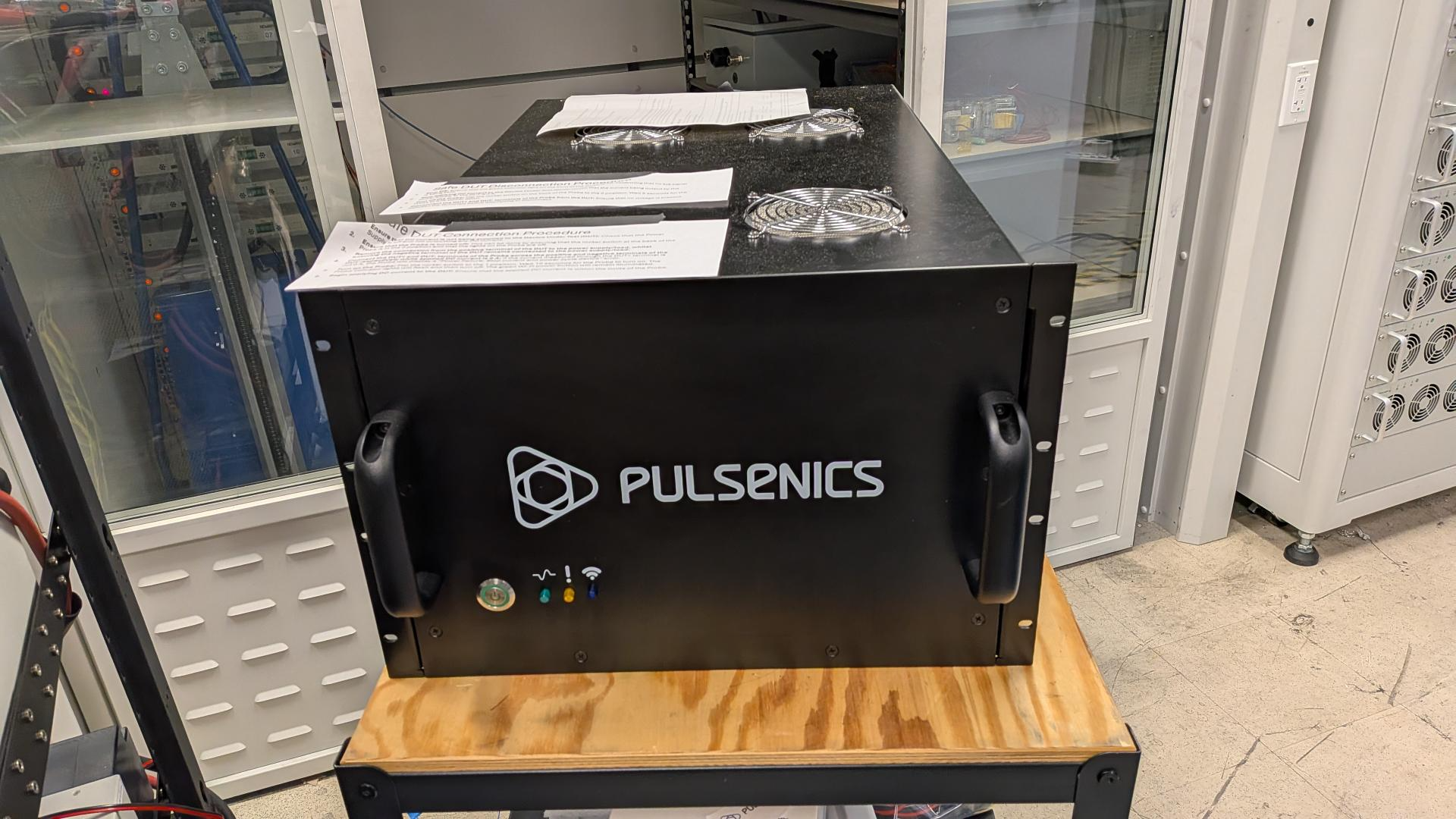
Testing successfully balanced measurement speed with signal stability by identifying the optimal operando C-rate—C/10 for the 217 Ah module (≈22 A DC). Multi-sine frequency injection allowed simultaneous low-frequency measurements down to 0.6 Hz, making it possible to capture both dynamic behavior and subtle electrochemical changes with high accuracy.
At the module level, simultaneous measurement of six virtual cells expanded the relevance of the dataset: industry-scale EIS signatures can now be captured for entire EV modules, not just individual cells.
How Rest Time Influences Impedance
One major goal of the study was to quantify how rest duration impacts impedance across SOC. Measurements taken after rest periods from 0 to 180 minutes revealed how quickly batteries settle after cycling.
The findings highlight two key points:
- Batteries continue to stabilize for a significant period after charge/discharge, especially at extreme SOCs.
- Frequency response varies with rest time, emphasizing the need for consistent protocols when using EIS for diagnostics or model validation.
These results give engineers clearer guardrails for designing testing procedures and interpreting EIS data in operational settings.
Mapping Impedance Across SOC—What Changes and Why
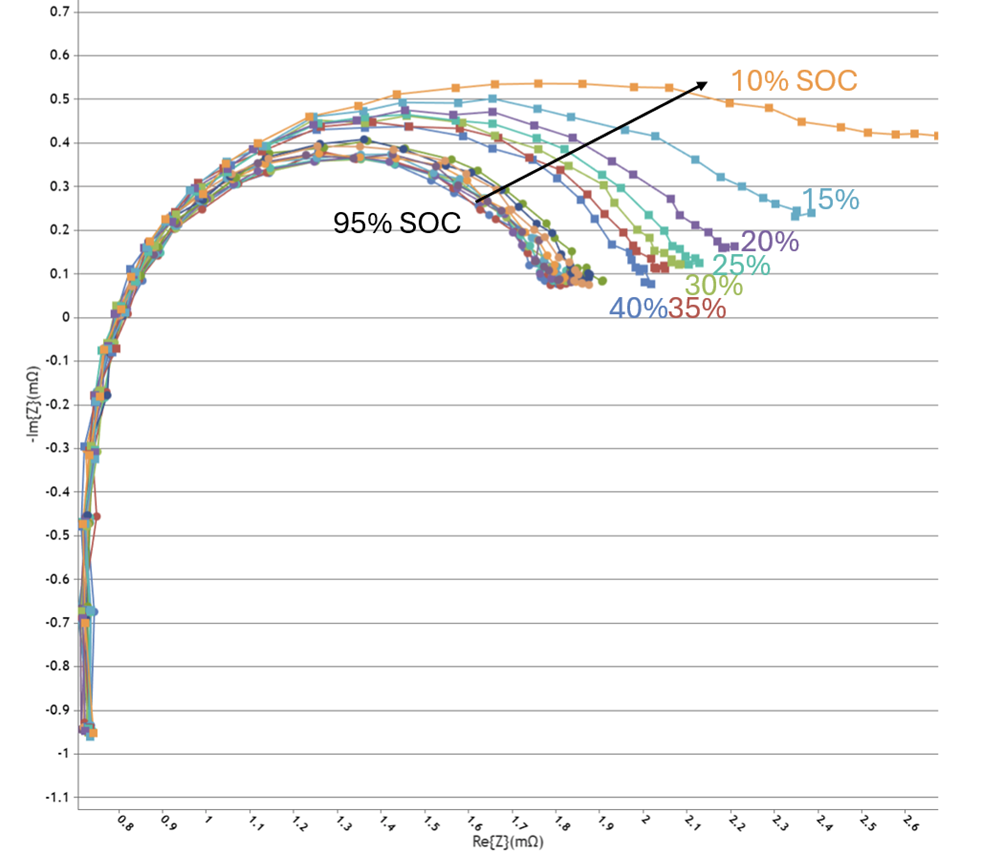
SOC-resolved EIS (every 5% SOC) provided one of the most valuable datasets in this program. Key trends include:
- Low-frequency regions change the most with SOC due to shifts in charge transfer resistance.
- Impedance profiles remain relatively consistent above ~40% SOC, suggesting improved predictability in mid-range operation.
- Strong SOC hysteresis: at the same SOC, impedance differs depending on whether the battery is charging or discharging.
SOC hysteresis underscores that EIS cannot be interpreted in isolation—directionality matters. Diagnostic algorithms and battery management systems (BMS) must account for this if they rely on impedance-based insights.
Temperature Effects on EV Impedance Behavior
A controlled temperature study (25°C vs. 40°C) enabled isolation of thermal impacts on the impedance spectrum. Higher temperature primarily reduced charge transfer resistance, consistent with accelerated electrochemical kinetics.
This reinforces that:
- Thermal conditions meaningfully influence impedance behavior.
- Multi-temperature databases are essential for accurate modeling of EV batteries in different climates and duty cycles.
The Value of a High-Accuracy EV EIS Database
This collaboration produced a robust set of EIS signatures under realistic conditions—operando cycling, module-level measurement, controlled SOC stepping, and temperature variation. These datasets support:
- Improved industry battery models
- BMS algorithm validation
- Deeper understanding of degradation pathways
- Accelerated development of diagnostic tools
Pulsenics’ measurement system delivered highly stable, sub-milliohm sensitivity across all conditions, providing a foundation for future large-scale analytics and modeling.
Looking Ahead
The combination of Pulsenics’ operando technology and UC San Diego’s advanced test infrastructure offers a blueprint for how EV battery characterization can evolve. As the industry demands more accurate models, faster development cycles, and better predictive diagnostics, datasets like these will be critical to bridging the gap between laboratory measurements and real-world behavior.
Interested in partnering on research?

