

Decarbonizing Construction with Electric Equipment and Mobile Charging Stations
Project Description
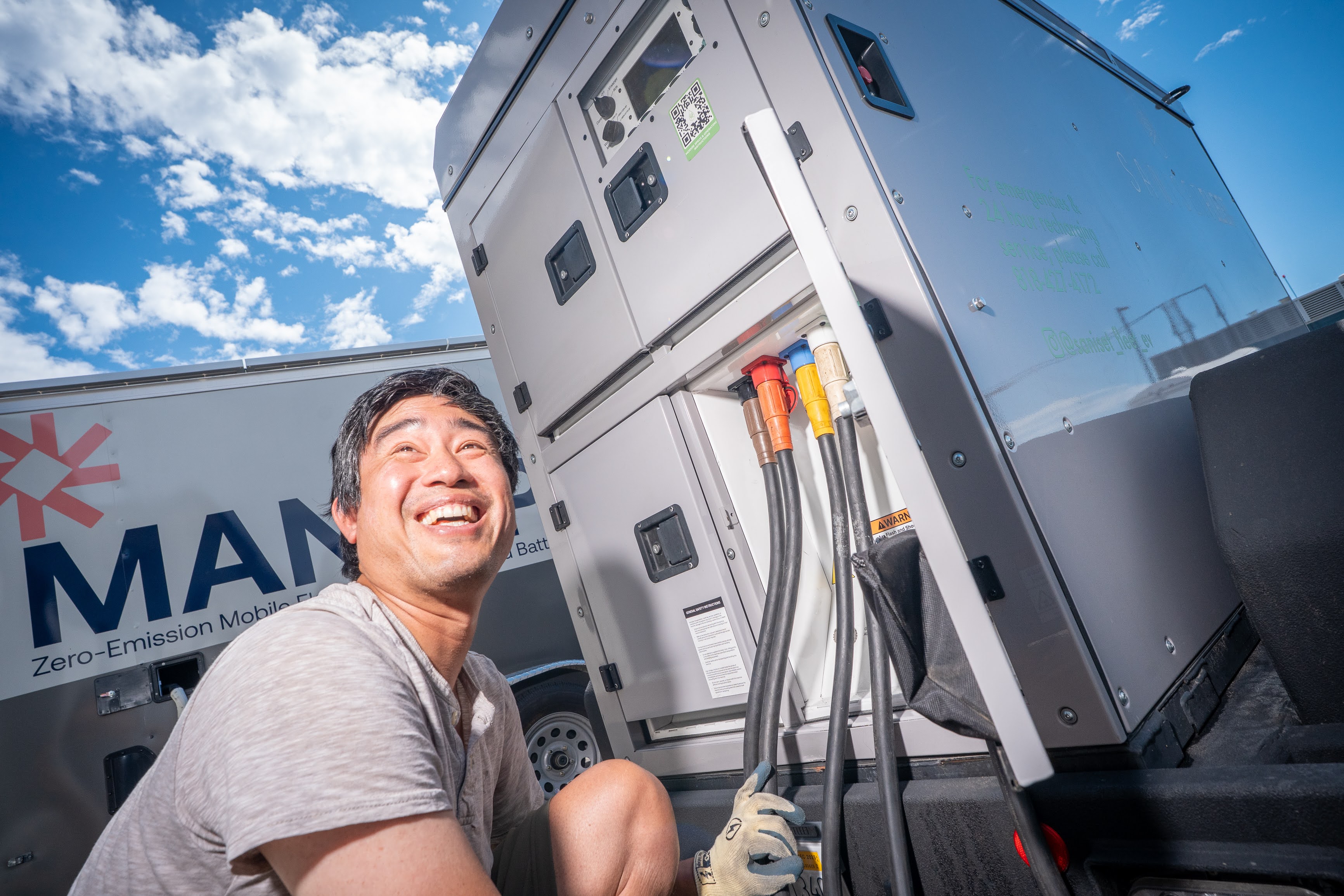
Heavy-duty vehicles contribute to 8% of U.S. greenhouse gas emissions, making their electrification crucial for decarbonizing the transportation and construction sectors. Our “Green Construct Charge” (GCC) project uses mobile, battery-powered charging stations to power electric construction equipment on active job sites, replacing diesel fuel with clean electricity and cutting local air and noise pollution.
Traditional off-road diesel equipment is a major source of greenhouse gases and harmful air pollutants, and many construction sites do not have enough grid capacity or time to install permanent chargers. Charging multiple machines at once can also spike peak electricity demand and drive expensive grid upgrades. GCC tackles these barriers by pairing mobile charging stations with a smart scheduling tool that coordinates when and where to charge, so construction can stay on schedule while minimizing emissions, costs, and grid impacts.
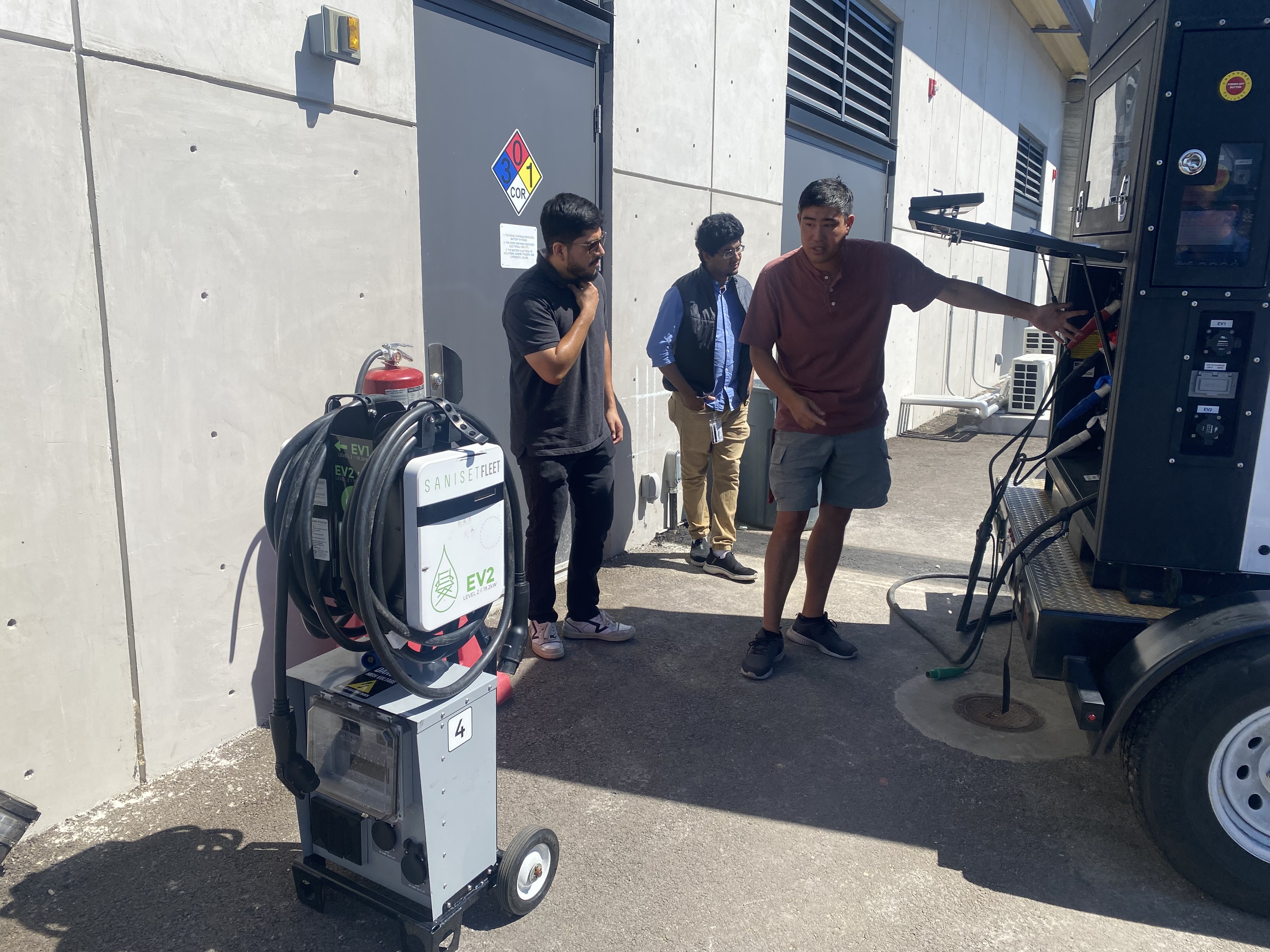
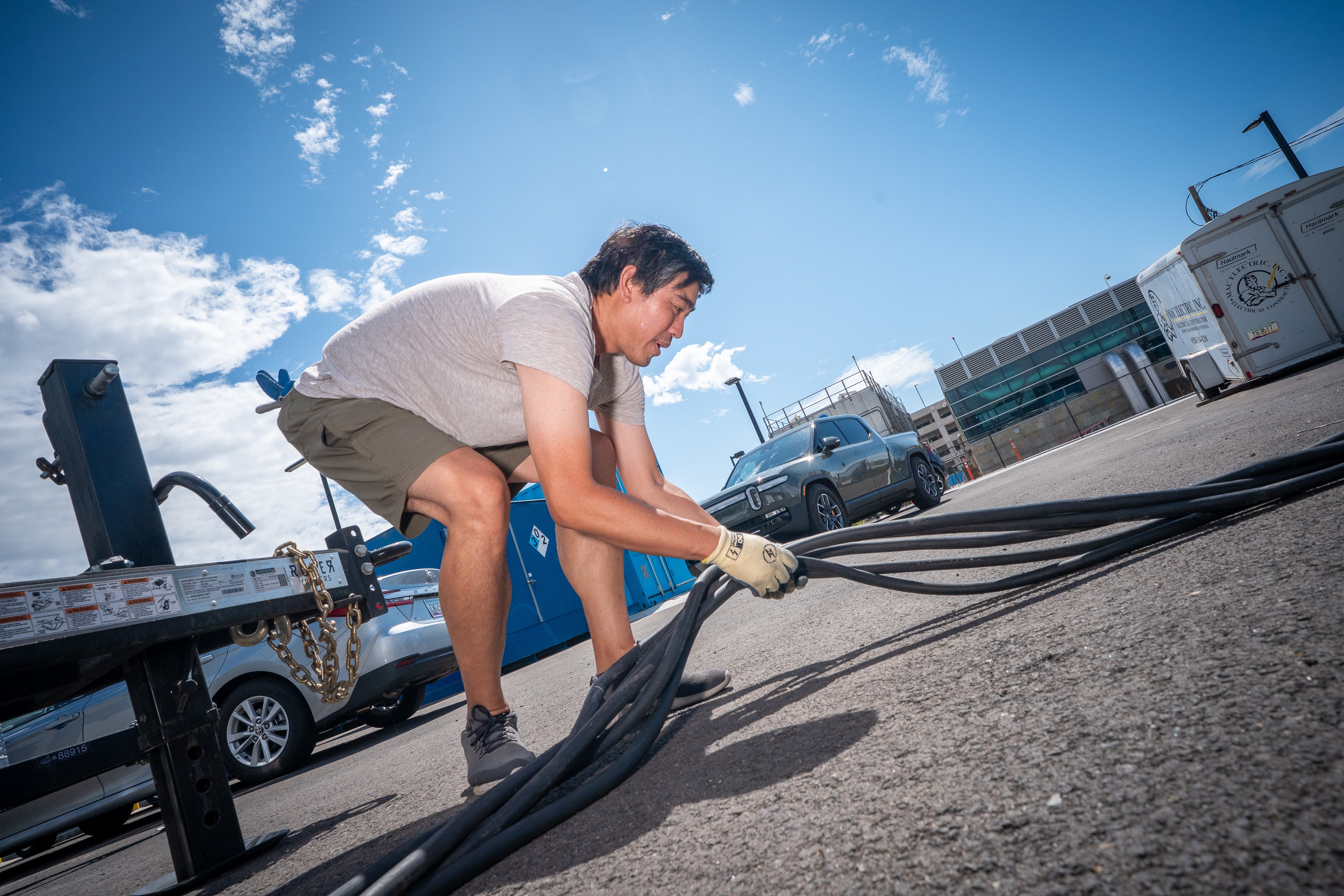
At UC San Diego, mobile battery trailers are charged at existing campus EV charging stations—often during off-peak or high-solar hours—and then towed to construction sites to power electric construction vehicles. The same systems are also tested on the UCSD microgrid as mobile backup power for buildings, demonstrating how a single investment can support both cleaner construction and community resilience during outages.
Over the course of the project, Green Construct Charge will validate mobile charging operations at multiple UC San Diego construction sites, quantify reductions in emissions, noise, and operating costs compared to diesel equipment, and measure grid benefits such as reduced peak demand and increased renewable self-consumption. The goal is to create a replicable model that contractors, utilities, and public agencies can use to deploy mobile charging for construction across California, especially in low-income and disadvantaged communities.
Results
Green Construct Charge is in its early implementation phase, moving from concept to tools, field planning, and initial demonstrations.
Early results include:
- Optimization platform developed: A user-friendly optimization and scheduling tool has been built to coordinate mobile charging stations and electric construction equipment, minimizing costs, emissions, and grid impacts while keeping projects on schedule. 2025-12-8 Energize Innovation P…
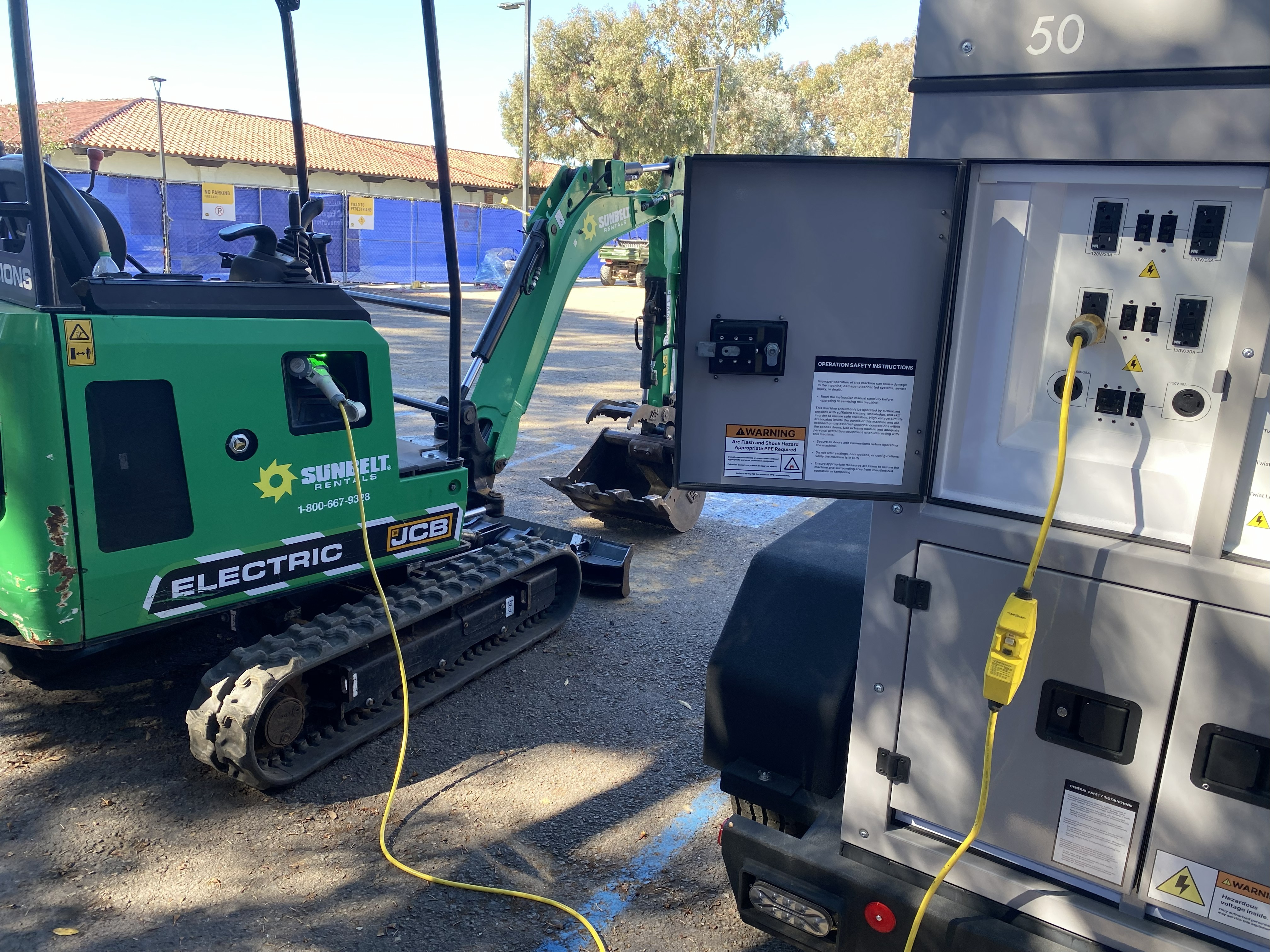
- First demonstration site selected and underway: UC San Diego and project partners selected the RIMAC Facility Expansion as the first demonstration site, where we are piloting an electric mini-excavator.
- Key learnings emerging:
1. User-friendly optimization is essential: Advanced scheduling and optimization tools only deliver value if they are intuitive for contractors and project managers. Early feedback highlights the importance of clear interfaces, simple inputs, and visual outputs that make it easy to plan charging around construction schedules.
2. Customer education on equipment and batteries is paramount: Contractors need practical guidance on what electric equipment is available, how long batteries will last under real-world duty cycles, and how to match the right machine and battery size to each use case. Helping users understand performance, runtime, and charging needs is critical for successful adoption.
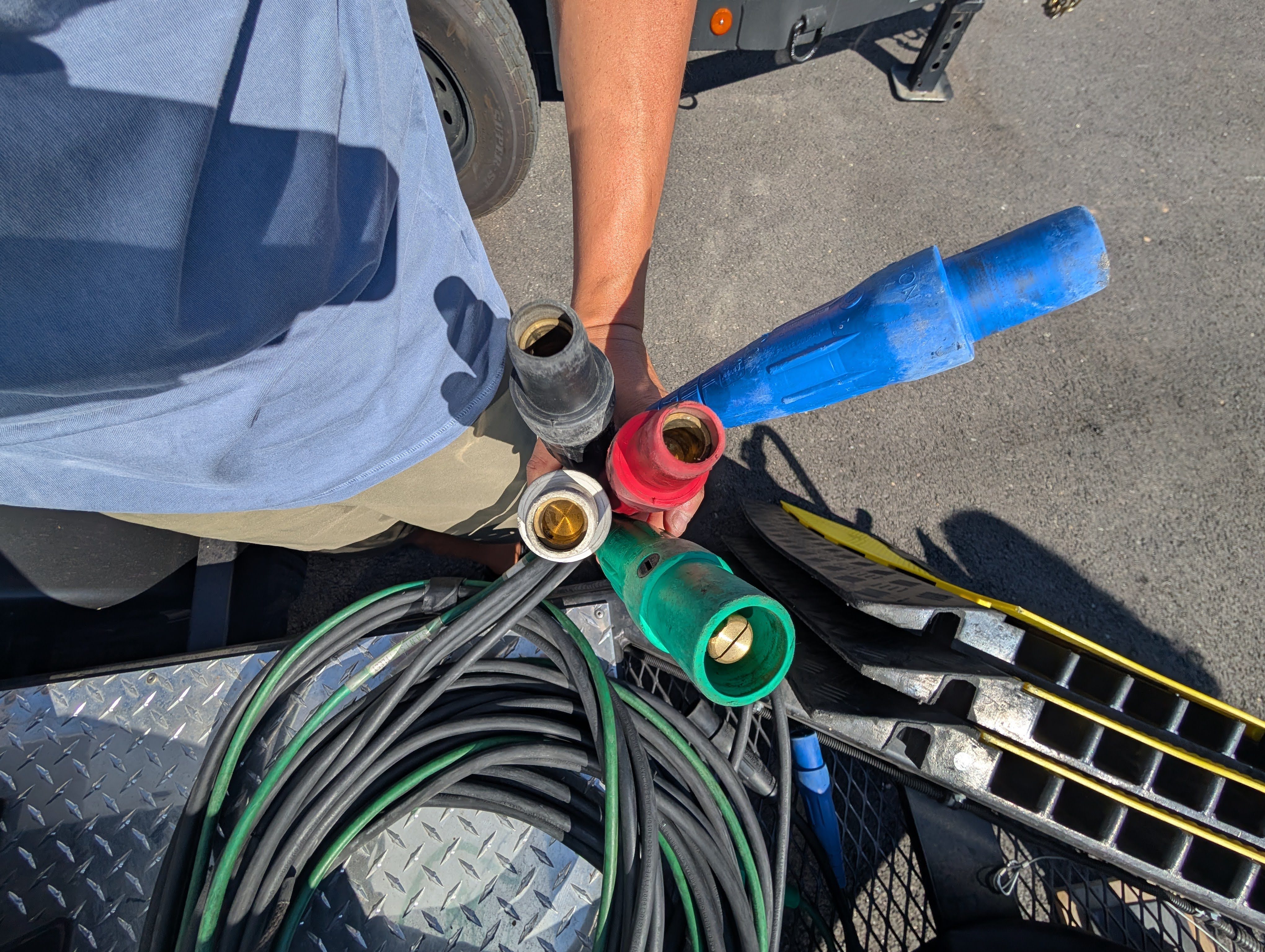
3. Interoperability and control matter for safety and reliability: Testing multiple mobile battery systems at our DERConnect microgrid testbed has revealed important practical lessons about communication, interoperability, and control.
Quantitative results on peak demand reduction, emissions reductions, and cost savings will be added as data from the full set of construction and microgrid demonstrations are collected and analyzed.
Links
Could Mobile Batteries Enable Electric Construction Vehicles and Enhance Grid Resilience? (article)
Project Executive Summary (document)
Interested in partnering on research?

